




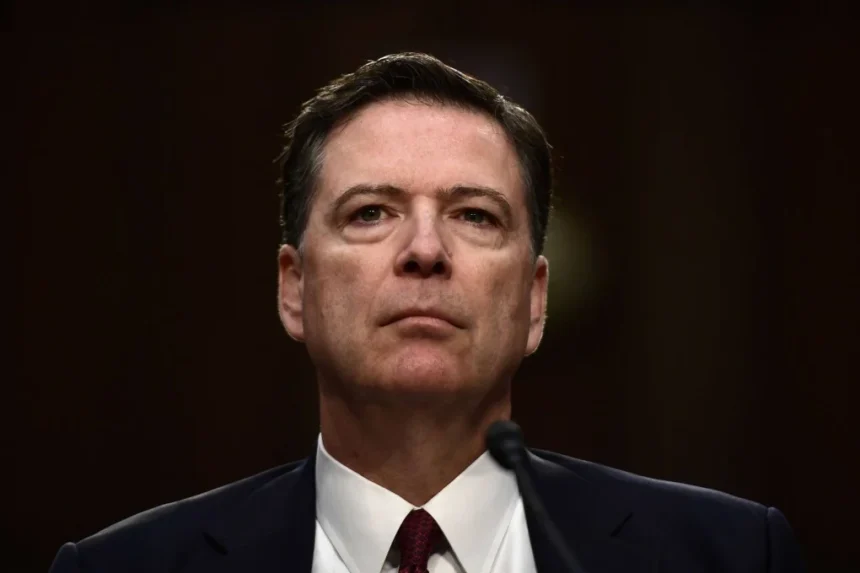
Former FBI Director James Comey has entered a plea of not guilty to charges of lying to Congress and obstructing justice, following an indictment issued by a federal grand jury at the request of the U.S. Department of Justice.
The accusations, linked to a 2020 statement made by a senior official before the Senate, were filed just days after President Donald Trump publicly urged that Comey, a long-time political adversary, be prosecuted — despite prosecutors previously finding no sufficient evidence of criminal conduct.
Comey, aged 64, appeared on Wednesday before a federal court in Alexandria, Virginia, for a preliminary hearing. After entering his plea, the court scheduled a jury trial for 5 January.
Following the hearing, Comey’s legal team announced plans to challenge the appointment of the special prosecutor overseeing the case, Lindsey Halligan. Halligan, formerly a personal solicitor to Trump and an outspoken supporter of the president, served briefly as a White House adviser before being assigned to lead the investigation into Comey’s actions — just four days before the indictment was filed.
The indictment followed a high-profile campaign by Trump and White House officials calling for Comey’s prosecution ahead of the statute of limitations deadline on 30 September. The initial prosecutor, Erik Siebert, had previously determined that there was insufficient evidence to bring criminal charges.
That conclusion reportedly angered Trump, who subsequently demanded Siebert’s removal and posted on social media urging Attorney General Pam Bondi to act “NOW” to pursue Comey and other individuals he viewed as political opponents.
Siebert resigned soon after and was replaced by Halligan, whose background lies primarily in insurance law rather than criminal prosecution. Her first major action as lead prosecutor was to present the case to a grand jury, which approved two of the three proposed charges. The third, the nature of which remains undisclosed, was dismissed.
During Wednesday’s proceedings, the government was represented by a team of prosecutors brought in from North Carolina by Halligan after internal objections were raised within the Department of Justice.
The charges stem from testimony Comey delivered under oath to Congress on 30 September 2020. He was questioned on whether he had authorised the disclosure of information relating to an investigation into possible connections between the Trump campaign and Russia during the 2016 U.S. presidential election. Comey has consistently denied ever having approved such a leak.
Appointed by former Democratic President Barack Obama, Comey, a lifelong Republican, was initially praised by Trump during the 2016 campaign for announcing two separate inquiries into Democratic candidate Hillary Clinton’s use of a private email server for official correspondence.
One of these announcements occurred only days before the election. Those announcements are widely believed to have damaged Clinton’s campaign and may have contributed to her narrow defeat.
However, the relationship between Trump and Comey deteriorated quickly after the president’s inauguration. Comey was dismissed from his position in May 2017, shortly after confirming that the FBI had opened an inquiry into potential coordination between members of Trump’s campaign and Russian officials.
That dismissal led to the appointment of former FBI Director Robert Mueller as Special Counsel to take over the Russia investigation. Mueller’s inquiry documented numerous contacts between Trump’s associates and Russian representatives but concluded there was insufficient evidence to establish a criminal conspiracy.
Since leaving the FBI, Comey has repeatedly called Trump “morally unfit” for office. Trump, in turn, has repeatedly described Comey and the investigation into Russian interference as a politically motivated “witch hunt.”